

Ball games are very important for the development of children. They promote motor skills, coordination and help strengthen social skills. There are different types of play balls. Each play ball has its advantages and disadvantages and is suitable for different age groups and areas of application. In this article you will learn more about them and which playballs are best for children.
What is the importance of ball games for children?
Ball games are very important for children’s development, as they can promote a variety of skills and competencies. There are many motor skills that can be improved: Agility, balance, coordination and dexterity. Social skills such as teamwork, cooperation and fairness can also be developed. Regular physical activity, such as that promoted by ball games, contributes to children’s health and well-being.
Ball games enhance children’s learning and cognitive development. They improve children’s ability to concentrate and think logically. Overall, ball games are a valuable activity for children because they can help promote their physical, social, and cognitive development.
Popular ball games for kids
Kids can enjoy a variety of activities and games with play balls. Here are some of the most popular and effective ways kids can use play balls:
- Ball throwing and catching: This activity is simple, but very effective in improving children’s motor skills and hand-eye coordination.
- Outdoor ball games: Games like soccer, basketball and volleyball are great ways for kids to improve their physical skills while also developing teamwork and social skills.
- Ball rolling and kicking: Children can also learn to roll or bump balls to improve their fine motor skills and hand-eye coordination.
- Juggling: Older children can learn to juggle balls to improve their dexterity and concentration.
Play balls provide children with pleasure and entertainment. They also allow to improve physical and cognitive skills.
What are the types of children’s playballs?
There is a wide range of balls for children. Some examples include inflatable balls, which are lightweight and easy to transport and are ideal for outdoor games like soccer and volleyball. Foam balls are soft and lightweight and especially suitable for young children, as they can be used indoors and outdoors and are safer than hard balls.
Plastic balls are durable and weather resistant and are great for games like basketball and handball. Softballs are also soft and lightweight, and are especially great for young children to improve their hitting and catching skills.
However, it is important to note that each game ball has its own advantages and disadvantages and is suitable for different age groups and applications. Therefore, you should always carefully consider which game ball is best for your child. Thus, there are children’s balls in small and children’s balls in large, according to the size of your child and the use of the children’s ball should be selected the ideal size.
Safety and care of children’s playballs
When choosing playballs for kids, it’s important to also pay attention to safety and care. Here are some things that should be considered:
- Safety: Make sure the ball is appropriate for the child’s age group and does not contain any small parts that can be swallowed or toxic materials. Check the ball and make sure it is sturdy and safe enough. It must withstand the demands of the game and not burst or tear.
- Storage: The ball should be stored in a dry and clean place when not in use. This will prevent damage or soiling. Balls should not be stored in the sun or near radiators, as this may cause deformation.
- Cleaning: Game balls should be cleaned regularly to remove dirt and bacteria. Cleaning depends on the type of ball – some can be cleaned simply with soap and water, while others require special cleaning agents. Make sure the ball is completely dry before using it again.
- Inspection: Check the ball regularly for damage or wear, especially if it is used often. If a ball is damaged or worn, it should be replaced to avoid injury.
By paying attention to the safety and care of playballs, you can ensure that children play safely and healthily and that the ball lasts longer.
Our TOGU experts advise:
Our tip for ball games is to always make sure you use the right ball for the game. Different ball games require different balls with specific characteristics, such as size, weight, material and bounce. If you use the wrong ball, the game can become uncomfortable or even dangerous.
It is also important to take proper care of the ball and clean it regularly to prolong its life and improve its play. You should also make sure that the ball is not over-inflated to avoid injury.
These products from TOGU might interest you:


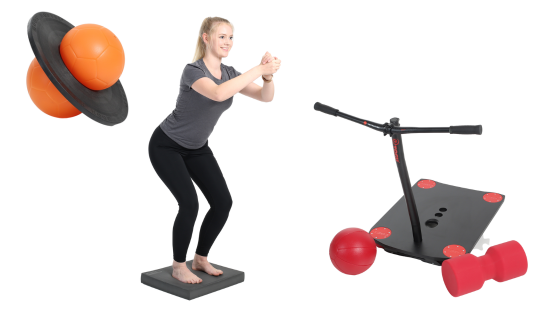

-
 Dynamisches Faszientraining: Die 7 Strategien von FASZIO® und ein Online Präventionskurs zum EinsteigenDynamisches Faszientraining nach dem FASZIO®-Konzept verbindet sieben Bewegungsstrategien, um Beweglichkeit, Elastizität, Kraft und Körperwahrnehmung zu fördern und einseitige Alltagsbelastungen auszugleichen. Im Online-Präventionskurs mit 10 Einheiten à 45 Minuten lernst du die Strategien Schritt für Schritt kennen – inklusive kostenlosem FASZIO® Ball allround und Neuro Stick sowie möglichem Zuschuss durch die gesetzlichen Krankenkassen.Mehr lesen
-
 FASZIO® goes Neuro – endlich kommt Faszientraining in den Kursraum!Wie arbeiten Faszien und Nervensystem zusammen? Mit den neuen FASZIO® Neuro Tools verbinden TOGU® und FASZIO® klassisches Faszientraining mit neurozentrierten Impulsen und bringen mehr Dynamik, Koordination und Abwechslung in den Kursraum.Mehr lesen
-
 Sprunggelenk stabilisierenSprunggelenk stabilisieren: So beugst du dem Umknicken vor Ob beim Volleyball, Joggen oder im Alltag – ein kurzer Fehltritt kann schnell zu einer schmerzhaften Verstauchung führen. Doch du kannst vorbeugen! Erfahre, warum ein gezieltes Balance- und Koordinationstraining deine Sprunggelenke stärkt und entdecke vier einfache Übungen mit den Senso® Balance Igeln für mehr Stabilität und Sicherheit bei jedem Schritt.Mehr lesen
-
 Gleichgewicht, Kraft und viel Austausch: 130 Teilnehmer beim TOGU TAG in AschauAschau im Chiemgau / Prien am Chiemsee, 19. Oktober 2026 – Rund 130 Teilnehmerinnen und Teilnehmer verbrachten am Samstag, 17. Oktober, einen Tag rund um Bewegung in der Priental-Halle in Aschau. Der Priener Hersteller TOGU hatte zum TOGU TAG 2026 eingeladen. Das Motto: „Gemeinsam gesund bewegen“.Mehr lesen
-
 Bewegung in der dunklen Jahreszeit: So bleibst du nach der Zeitumstellung in SchwungSeit dieser Woche gilt wieder die Winterzeit. Um 3 Uhr am Sonntag sprangen die Uhren auf 2 Uhr zurück, die Nacht hatte 25 Stunden. Ab jetzt beginnt der Feierabend in der Dämmerung, und viele spüren in den ersten Tagen, dass der Körper noch im alten Takt läuft. Eine Frage, die Physiotherapeuten aus unserem Netzwerk in diesen Wochen oft hören: Wie bleibe ich in Bewegung, wenn es um fünf schon dunkel wird? Die Antwort ist erfreulich bodenständig. Es braucht Tageslicht, ein paar feste Gewohnheiten und eine kurze Übungsfolge, die in jedes Wohnzimmer passt.Mehr lesen
-
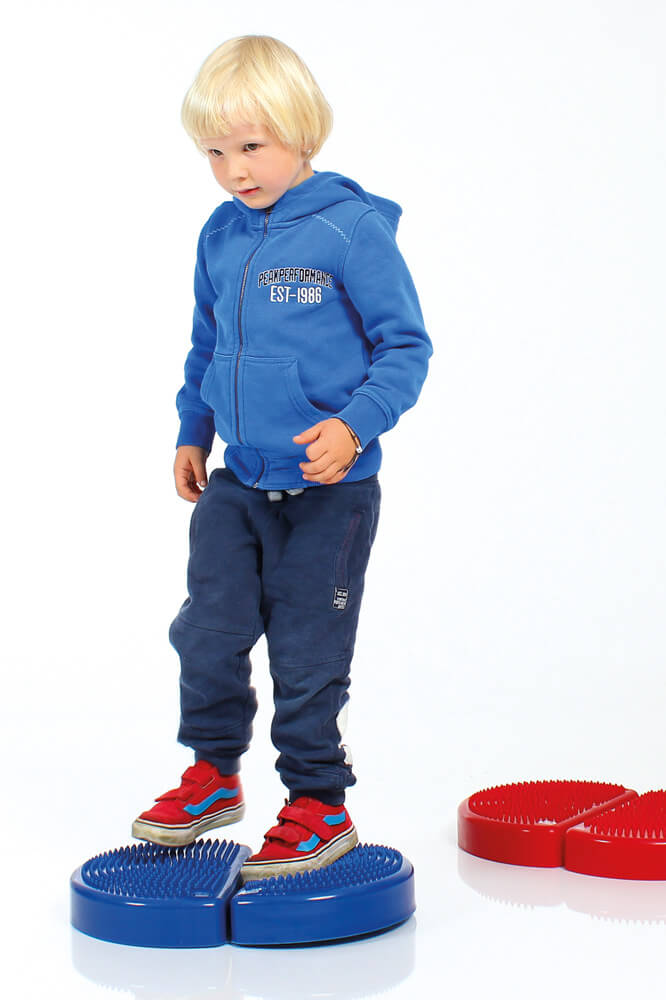 Bewegungsspiele für drinnen: So toben Kinder fröhlich durch den HerbstHalb fünf, draußen nieselt es, und im Wohnzimmer klettert jemand zum dritten Mal über die Sofalehne. Mit der Zeitumstellung am 25. Oktober wird es noch früher dunkel, und der Spielplatz rückt für viele Familien in die Ferne. Die Energie der Kinder bleibt. Sie braucht nur einen neuen Ort.Mehr lesen
-
 Equestrian fitness is much more than just a traditional full-body workoutRider fitness is much more than a traditional full-body workout. This highly effective fitness course, specifically designed to meet the needs of riders, focuses precisely on the areas where stability, mobility and subtle aids in the saddle originate. Instead of conventional one-size-fits-all workouts, the focus is on targeted exercises for the shoulder girdle, back and deep core muscles, pelvic floor, diaphragm and respiratory muscles, as well as the stabilising muscles around the pelvis and hips.Mehr lesen
-
 70 Years of TOGU – Seven Decades of Ball Manufacturing by Lake ChiemseeHow two brothers in Prien-Bachham by Lake Chiemsee developed the first seamless play ball in 1956 – and turned it into a family business that is now run by the third generation and inspires movement around the world.Mehr lesen
-
 Neurofitness: Why Training Your Brain May Be One of the Smartest Investments in Healthy AgingWhen people think about fitness, they usually focus on muscles, strength, or endurance. But every movement we make starts somewhere else first: the brain.Mehr lesen
-
 Balance Can Be Trained – And It’s More Important Than EverWhen people think of balance training, they often associate it with older adults or rehabilitation programs. In reality, balance is a fundamental component of nearly every movement we make—regardless of age.Mehr lesen
-
 Why Muscle Strength Is a Key Biomarker for Healthy AgingFor many years, blood pressure and cholesterol levels were considered some of the most important indicators of overall health. Today, however, research is increasingly highlighting another powerful predictor of healthy aging: muscle strength.Mehr lesen
-
 Longevity Starts with Movement – Why Strength and Balance Are Essential for Healthy AgingMore and more people want not only to live longer but also to remain healthy, active, and independent for as long as possible. This is the core idea behind longevity: it is not just about extending lifespan, but about increasing our healthspan—the years in which we maintain physical and mental well-being.Mehr lesen