
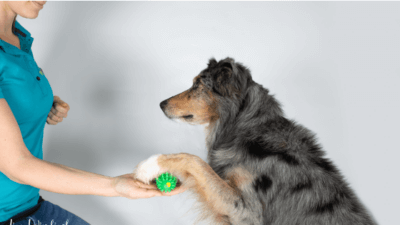
Pawing through, a misalignment or weakness of the limbs, especially the forelimbs, can cause significant discomfort to dogs. This condition causes the dog to not be able to distribute its weight evenly on its paws and has difficulty maintaining a normal posture.
In this blog article, you’ll learn how to improve your dog’s stride. Learn more about exercises and tips on how you can use the TOGU Brasil hand trainer as a training tool to help with the follow through.
What is meant by piercing in dogs?
Metatarsal in dogs refers to a deformity or weakness of the limbs, especially the forelimbs. It is a condition in which the dog is unable to distribute its weight evenly on its paws and maintain a normal posture. It causes the paws to kick through downward, putting excessive pressure on the dog’s joints, muscles and ligaments.
There can be a variety of causes for the step-through, including genetic predisposition, weakness of the ligamentous system, inadequate muscle development, injury, neurological problems, or diseases such as osteoarthritis. It is common in certain breeds of dogs, especially those with longer backs and shorter legs.
Symptoms of limping can vary from dog to dog, but typical signs include a downward sagging or hyperextended forelimb, poor gait, uneven weight bearing on the paws, limited mobility, and possibly pain or discomfort when walking or running.
It is important to recognize and treat the patency early to prevent worsening of the symptoms and further complications. Appropriate measures can be taken to improve the puncture and increase the dog’s well-being.
How can the penetrability be improved?
Improving the dog’s ability to kick through requires a holistic approach that focuses on strengthening the muscles, promoting joint mobility and supporting the ligamentous system. Here are a few measures that can help improve the treadmill:
- Dog fitness training: Targeted dog fitness training can help strengthen the dog’s muscles and improve balance. Exercises such as coordination training, balance exercises and targeted forelimb strengthening exercises can be helpful. The paw pull, is an exercise that can be used specifically to improve in cases of severe treading.
- Physical Therapy: A canine physical therapist can develop individualized treatment plans tailored to the needs of the specific dog. This may include massage, passive joint movement, manual therapy, and other physical therapy techniques to help improve the kicking through.
- Nutrition: A balanced diet that meets the needs of the dog is important to promote optimal muscle development and joint health. A high quality diet that is adapted for patency and contains all the necessary nutrients can help support a dog’s health and muscle development.
- Weight Control: Excess weight can exacerbate kicks by putting additional pressure on the dog’s joints and ligamentous apparatus. Healthy weight control through a balanced diet and adequate exercise can help reduce stress on the forelimbs.
It should be noted that the treatment of the puncture should be individualized for each dog. Each dog is unique, and the best course of action may vary depending on the severity of the puncture, breed, age and other factors. Therefore, professional advice and guidance from a veterinarian or canine physical therapist is essential.
How can the Paw Pull assist with punctures?
The Paw Pull can be used in various areas and is an indispensable part of our dog fitness training.
We like to use the Paw Pull for sporting dogs in the warm-up area, especially when there is a lot of stress on the forelimbs in sports, but also for older dogs that shift a lot of weight to the front half of the body, as well as for dogs with a weak ligament system to prevent overstretching of the toe flexors.
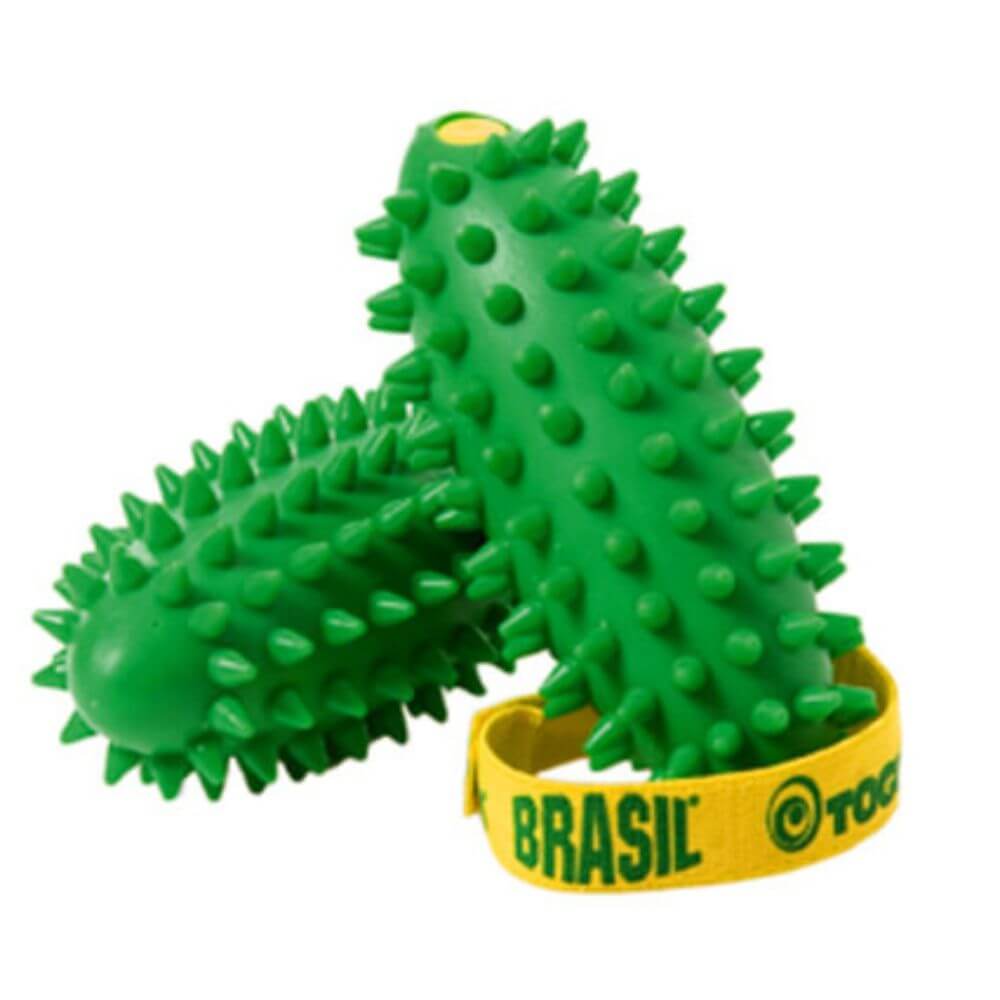
The Brasil Hand Trainer can support this. It lies comfortably in the hand and is peppered with many soft pimples, which are not perceived as uncomfortable by most dogs. However, if you have a very paw-sensitive dog, you can wrap the device in a thin cloth at the beginning and slowly get your dog used to this unusual structure.
This great training tool fits in any training bag and can therefore also be used well on the training field or on the outdoor walk.
When to use the Brasil Hand Trainer for paw training?
The Brasil Hand Trainer is used in a variety of situations including:
- Warm up for sport dogs (e.g. agility, flyball, frisbee)
- Warm up for rescue dogs mainly in the area of rubble search
- Warm up for sighthounds running on the racetrack
- Weakness of ligaments (carpal joint and paw)
- As a prophylaxis for dogs that put a lot of weight on their forehands
- In the case of limping of the forelimbs
- For better joint mobility of the forelimbs
- To strengthen the muscles of the forelimb
- In case of neurological deficits
- In case of hyperextension trauma (e.g. jumping from a great height)
Attention:
If your dog suffers from a painful paw condition or even has toe arthritis, training should be discussed with a veterinarian or canine physical therapist!
Dog piercing – what exercises help?
If your dog already knows how to give paw, that’s half the battle….
- Position yourself in front of your sitting dog, for small dogs it is recommended to sit down as well.
- First put the Brasil dumbbell behind you and ask your dog to give paw a few times and confirm this.
- Since your dog is already in the flow, take the Brasil dumbbell in your hand as a matter of course and ask your dog to give paw again.
- Make sure that you don’t have any food in your other hand or keep this hand behind your back so as not to distract the dog.
Refine the workout by rewarding particularly good executions.
If your dog can’t do the pawing thing….
- Take a small chunk of food and hold the Brazil dumbbell close to the ground with the food under it in front of the dog’s nose.
- Depending on the type of dog, they may need a little verbal encouragement or you may wait to see if your dog is about to become active.
- When your dog uses his nose to get the food, just wait (don’t say “no” or anything like that). Watch for the slightest movement of the paw in your direction and acknowledge it immediately.
- When your dog understands the game, bring the dumbbell up in small steps and place the food under it. The food then comes back out of the food bag behind you as a reward.
- If you also want to strengthen the upper arm muscles, you can introduce a new signal (instead of “paw”) and tickle out the pulling on the dumbbell a little more.
If your dog is already putting the paw on purposefully and forcefully, you can carefully try to slowly build up a pull. Probably your dog will already resist.

-
 Bewegungsspiele für drinnen: So toben Kinder fröhlich durch den HerbstHalb fünf, draußen nieselt es, und im Wohnzimmer klettert jemand zum dritten Mal über die Sofalehne. Mit der Zeitumstellung am 25. Oktober wird es noch früher dunkel, und der Spielplatz rückt für viele Familien in die Ferne. Die Energie der Kinder bleibt. Sie braucht nur einen neuen Ort.Mehr lesen
 -
 Equestrian fitness is much more than just a traditional full-body workoutRider fitness is much more than a traditional full-body workout. This highly effective fitness course, specifically designed to meet the needs of riders, focuses precisely on the areas where stability, mobility and subtle aids in the saddle originate. Instead of conventional one-size-fits-all workouts, the focus is on targeted exercises for the shoulder girdle, back and deep core muscles, pelvic floor, diaphragm and respiratory muscles, as well as the stabilising muscles around the pelvis and hips.Mehr lesen
 -
 70 Years of TOGU – Seven Decades of Ball Manufacturing by Lake ChiemseeHow two brothers in Prien-Bachham by Lake Chiemsee developed the first seamless play ball in 1956 – and turned it into a family business that is now run by the third generation and inspires movement around the world.Mehr lesen
 -
 Neurofitness: Why Training Your Brain May Be One of the Smartest Investments in Healthy AgingWhen people think about fitness, they usually focus on muscles, strength, or endurance. But every movement we make starts somewhere else first: the brain.Mehr lesen
 -
 Balance Can Be Trained – And It’s More Important Than EverWhen people think of balance training, they often associate it with older adults or rehabilitation programs. In reality, balance is a fundamental component of nearly every movement we make—regardless of age.Mehr lesen
 -
 Why Muscle Strength Is a Key Biomarker for Healthy AgingFor many years, blood pressure and cholesterol levels were considered some of the most important indicators of overall health. Today, however, research is increasingly highlighting another powerful predictor of healthy aging: muscle strength.Mehr lesen
 -
 Longevity Starts with Movement – Why Strength and Balance Are Essential for Healthy AgingMore and more people want not only to live longer but also to remain healthy, active, and independent for as long as possible. This is the core idea behind longevity: it is not just about extending lifespan, but about increasing our healthspan—the years in which we maintain physical and mental well-being.Mehr lesen
 -
 A day full of activity, learning, and hands-on experienceSpecialist Workshop: Movement Competence in Canine Therapy – Holistic Concepts for Rehabilitation, Training, and Sustainable Performance on 29.04.2026Mehr lesen
 -
 TOGU Medicine Ball Classic: The Athletic Tool for athletesMore power, more control – why the TOGU Medicine Ball is a must-have in athletic training You train hard. You want results. And you know that the right tools make all the difference. The TOGU Medicine Ball Klassik is no nostalgic relic from the gym class era – it's one of the most effective pieces of equipment for explosive strength training, coordination, and functional athleticism.Mehr lesen
 -
 Unter der Lupe: TOGU® Brasil - mehr als nur ein FitnessbegleiterHeute testen wir für Euch die TOGU® Brasil. Ihr kennt diese kleinen stacheligen Kiwi-großen, mit Gewicht gefüllten Dinger vielleicht aus dem Fitness-Bereich oder aus dem Rückentraining. Aber diese kleinen Brasil lassen sich auch wunderbar in der Psychomotorik einsetzten, das möchten wir Euch heute gerne aufzeigen.Mehr lesen
 -
 TOGU: Moving Together for Health Day 2026 – Inspiration, exercise, and powerful motivation for an active lifestyleMovement connects, inspires, and creates new energy – that is exactly what the TOGU Together for Healthy Movement Day 2026 is all about on Saturday, October 17, 2026 in the Priental Hall in Aschau im Chiemgau.Mehr lesen
 -
 TOGU at therapie MÜNCHEN 2026The therapy MÜNCHEN 2026 brings together the therapy industry from Southern Germany, Austria and Switzerland on 19 and 20 June 2026 and sets important impulses for practice, training and rehabilitation.Mehr lesen