
- What is lumbar spine syndrome and what causes it?
- What is degenerative lumbar spine syndrome?
- How long does the lumbar spine syndrome last?
- How to treat the lumbar spine syndrome?
- How can exercises and training help with lumbar spine syndrome?
- Our TOGU experts advise:
- These products from TOGU might interest you:
A strong and healthy back is crucial for an active and pain-free life. But unfortunately, many people suffer from lower back discomfort, particularly in the lumbar spine. Lower back syndrome, also known as lumbar spine syndrome, can lead to pain, limitations and an impaired quality of life.
But there is hope: with targeted training and exercises, lumbar spine syndrome can be effectively treated and symptoms relieved. In this blog article, we’ll take an in-depth look at lumbar spine syndrome, examine its causes and symptoms, and most importantly, shed light on the role of training and exercises in treating the syndrome.
What is lumbar spine syndrome and what causes it?
Lumbar spine syndrome, or LS syndrome, refers to a set of symptoms and discomforts that occur in the lower back. It is a common problem that can affect people of all ages, especially older adults and those who follow a sedentary lifestyle. The pain can be acute or chronic, with lumbar spine syndrome symptoms persisting over a long period of time.
The exact causes of lumbar spine syndrome can be varied, and often there are several factors at play. Here are some common causes:
- Muscle tension and strain: Sitting for long periods of time, poor posture, heavy physical labor, lack of exercise or lifting heavy objects incorrectly can lead to muscle tension and strain in the muscles of the lower back.
- Herniated discs: Between the vertebrae of the spine are intervertebral discs that act as buffers. When the outer ring of the disc is weakened or ruptured, the soft core can push outward and press on nerve roots in the lower back, causing pain.
- Misalignments and instability: Congenital or acquired misalignments of the spine, such as spinal curvature (scoliosis) or instability of the vertebrae, can promote LS syndrome.
- Injuries and accidents: Back injuries from accidents, falls or sports accidents can cause or contribute to lumbar spine syndrome.
- Obesity: Excess weight places additional stress on the spine and increases the risk for LS syndrome.
It is important to note that LS syndrome can vary from individual to individual and that the exact cause may not be clearly identified in each case. A medical examination and diagnosis are crucial to determine the exact causes of the individual complaints and to initiate appropriate treatment.
What is degenerative lumbar spine syndrome?
Degenerative lumbar syndrome refers to age-related changes in the lumbar spine that can lead to pain and impairment. Over time, the discs between the vertebrae can become worn and flattened, resulting in reduced shock absorption and increased stress on the vertebrae. In addition, bony outgrowths (called osteophytes or bone spurs) can develop, irritating the surrounding tissue and causing acute pain.
The vertebral joints can also degenerate and lose stability. These degenerative changes can lead to chronic and severe low back pain, stiffness and limited mobility. Targeted treatment and pain relief measures are important to improve the quality of life of those affected.
How long does the lumbar spine syndrome last?
Lumbar spine syndrome duration can vary and depends on several factors, including the severity of symptoms, the underlying cause, and the type of treatment. In some cases, LS syndrome may occur acutely and improve within a few weeks or months. In others, however, it may be chronic and persist over a long period of time.
It is important to note that individual recovery may vary. Some people may experience rapid improvement, while for others it may take longer. Continued collaboration with medical professionals and adherence to the recommended treatment plan are critical to achieving the best results.
How to treat the lumbar spine syndrome?
Treatment of lumbar spine syndrome includes conservative and interventional measures. Conservative approaches include pain relief with medications, physical therapy to strengthen muscles and improve flexibility, and heat and cold therapy. Interventional procedures such as injections and nerve blocks may also be used.
In severe cases, surgery may be considered. Individualized treatment in consultation with a physician is important. Complementary lifestyle changes such as regular exercise, weight management and a healthy diet can help provide long-term relief.
How can exercises and training help with lumbar spine syndrome?
Exercises and training can play an important role in treating lumbar spine syndrome. Here are some ways they can help:
- Strengthening the muscles: Targeted exercises can strengthen the muscles in the lower back and around the lumbar spine. Strong muscles provide more support and stability for the spine, which reduces strain and can relieve pain.
- Improve flexibility: Stretching exercises stretch the muscles and ligaments in the lower back, which increases flexibility and improves range of motion. This relieves stiffness and reduces the likelihood of injury.
- Improving Posture: Targeted exercise can help develop better posture and stand tall. Proper posture relieves pressure on the spine and reduces pressure on the discs and nerve roots.
- Pain relief: specific exercise releases endorphins, the body’s natural painkillers, and may relieve pain. In addition, exercise can improve circulation and have anti-inflammatory effects.
- Preventing further damage: regular exercise and specific exercises can prevent future injuries and damage to the lumbar spine. Strong muscles and good flexibility provide better protection and improve overall spinal health.
It is important that training is done under the guidance of a professional such as a physical therapist or athletic trainer who can address the specific needs and limitations of the individual. Customized exercise programs can be developed to achieve optimal results and minimize potential stress.
Our TOGU experts advise:
An individualized exercise routine, tailored to specific needs and limitations, can be critical to achieving maximum benefits and minimizing potential stresses.
It is also important to be patient and take a gradual approach. Start slowly and gradually increase the intensity and volume of exercises to avoid overuse. Consistency is also key – regular exercise sessions are more effective than sporadic activity. Remember that exercise is an adjunct to overall treatment, and other therapies and interventions are also important in consultation with healthcare professionals.
These products from TOGU might interest you:
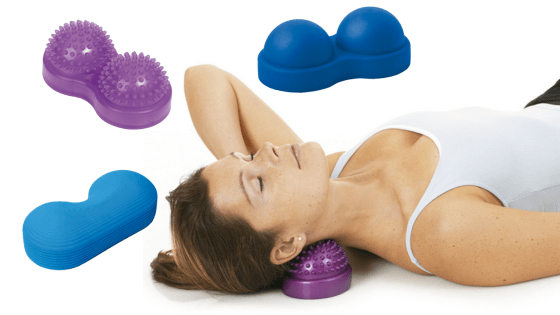
Dyanair® Ballkissen® Senso® 33cm


-
 TOGU at therapie MÜNCHEN 2026The therapy MÜNCHEN 2026 brings together the therapy industry from Southern Germany, Austria and Switzerland on 19 and 20 June 2026 and sets important impulses for practice, training and rehabilitation.Mehr lesen
 -
 TOGU Trainings-Charts – inspiration for your workoutWho doesn’t know this? You plan to train regularly – but in everyday life, orientation is often missing. Which exercises fit which goal? How do I combine stability, strength, and mobility in a meaningful way? And how do I make sure that I use a product like the Jumper, the Aero Step, or the Redondo Ball really effectively?Mehr lesen
 -
 TOGU Tai Chi Ball – Fluid Movement and Inner BalanceThe TOGU Tai Chi Ball is more than just a training device – it becomes a gentle point of connection between your hands. With its soft shape, it promotes the smooth, circular movements that define the essence of Tai Chi and helps improve coordination, balance, and mindfulness.Mehr lesen
 -
 Präha: Why targeted training before surgery is so importantSurgery is always a challenge for the body. Whether it is the knee, hip, shoulder or spine – every procedure means stress for the tissue, a phase of immobilization and then the arduous reconstruction. What many do not know: How well the body regenerates after surgery depends decisively on how well it was prepared beforehand. This is exactly where prehabilitation comes in – the preoperative phase in which targeted training sets the course for a better healing process.Mehr lesen
 -
 Daily Back Exercises: More Strength, Less Tension, Better Body AwarenessA strong back does not happen by chance. It develops through regular, well-dosed movement – and through exercises that target exactly where we often do too little in everyday life: stability, mobility, and conscious body awareness. Back exercises do not have to be complicated or time-consuming. Just a few minutes a day can provide noticeable relief and offer long-term protection.Mehr lesen
 -
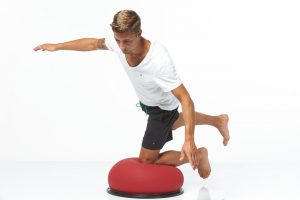 Get Fit for Spring Outings: Stability & Strength for Hiking, Running, and CyclingAs the days get longer and temperatures rise, we are almost automatically drawn outside. The first hiking trails become accessible again, running shoes are ready, and the bicycle is waiting to finally be taken out of its winter rest. But as great as the motivation in spring may be – the body often needs a moment to find its rhythm again. This is exactly where the real preparation for the outdoor season begins: with stability, strength, and mobility.Mehr lesen
 -
 Exercise builds strength: How we can encourage children to be more active through playChildren naturally move in a very instinctive way. They run, jump, climb, balance – and discover the world in the process. But in the everyday life of many families, reality looks different: long periods of sitting at school, homework, digital media, and a tightly scheduled daily routine often cause natural movement to shrink. Yet movement is not only important for physical development, but also for concentration, self-confidence, and emotional stability.Mehr lesen
 -
 Saxon Health and Sports Academy 2026Driving Innovation in Modern Health and Sports June 6, 2026, marks the return of the event. The Saxon Health and Sports Academy invites professionals and interested individuals to an inspiring day of continuing education in Dresden.Mehr lesen
 -
 Start with a home workout—and make exercise a regular part of your daily routine.Getting started with training does not begin with perfection, but with a simple principle: consistency beats intensity. Especially in everyday life, which is often full, hectic, and unpredictable, movement quickly becomes secondary. Yet this is exactly where the key lies: When movement becomes a natural part of your day, not only your body changes – but your overall well-being as well.Mehr lesen
 -
 Heavy Legs? – How the TOGU Senso Vein Trainer can helpHeavy legs, feelings of tension, or tired calves in the evening – many people are familiar with this unpleasant problem. Those who sit or stand a lot, or who get little exercise, quickly notice that their legs become heavy and swollen. The cause can sometimes be a weakness in venous function: the blood doesn't flow back optimally, it pools in the legs – and this leads to the typical feeling of heaviness.Mehr lesen
 -
 Trust built over generations – 70 years of TOGUWhat connects top international athletes with amateur athletes, therapy patients, and bright children? They all train or play with TOGU's air-filled products. The developments over the company's 70-year history, such as the Moonhopper®, the Aero-Step®, the TOGU Jumper®, the Dynair® Ball Cushions®, and the Powerball® ABS® exercise balls from this Upper Bavarian creative powerhouse, have long since convinced experienced physiotherapists, sports scientists, trainers, and above all, countless satisfied users of their effectiveness. This worldwide success is also based on the company's strong regional roots. Not only in terms of its extensive product portfolio, but especially in terms of its sense of responsibility, the company has been guided since its founding in 1956 by the motto: Tradition behind it – future in sight.Mehr lesen
 -
 Physiotherapeutic Work with TOGU Products in Animal TherapyIn my daily work with horses and dogs, one aspect is always at the center of my approach: functional movement, body awareness, and sustainable stability. As a physiotherapist and osteopath, I do not work in a purely symptom oriented way, but focus on underlying causes. The goal is to restore physiological balance and support the body’s natural ability for self regulation. It is precisely at this point that the products of TOGU Animal come into use.Mehr lesen