
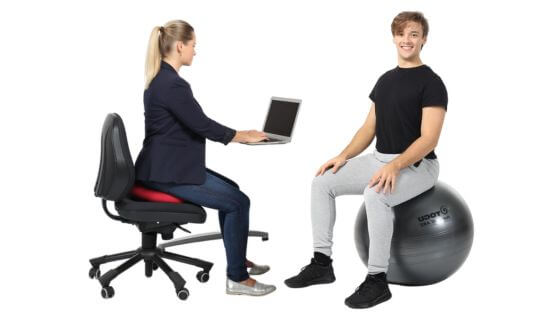
Imagine sitting at your desk for hours, focused on your work. But after a while you notice a stiff shoulder, an aching back or even a headache. Do you know this? Many people who have sedentary jobs struggle with physical problems due to poor sitting posture.
The optimal sitting position at the desk plays a crucial role in physical well-being and health. It’s not just about a comfortable position, but more importantly an ergonomically correct alignment of your body to minimize strain and improve posture. In this blog article, we provide valuable tips for maintaining an upright posture at work.
What are the effects of a bad seating position?
A bad sitting position at work can have various long-term negative effects on the body. Here are some possible consequences of poor sitting posture:
- Back pain: A bad sitting position can lead to tension and pain in the back, especially in the lower back. Incorrect posture can overload the spine and intervertebral discs.
- Neck and shoulder discomfort: Leaning forward or raising the shoulders can cause tension and pain in the neck and shoulders. This can lead to headaches, stiffness and limited mobility.
- Deterioration of posture: In the long term, a bad sitting posture can lead to a change in the natural posture of the body. This can cause the muscles and ligaments to become accustomed to the incorrect alignment and make it more difficult to maintain good posture.
- Impaired blood circulation: An awkward sitting position can impair blood circulation, especially if the legs cannot be placed flat on the floor or the femoral artery is pinched off. This can lead to fatigue, swelling and numbness in the legs.
- Impaired breathing: A forward-leaning posture can impair breathing because the lungs cannot fully expand. This can lead to shallower breathing and reduced oxygen supply, which in turn can affect concentration and productivity.
- Muscle tension and weakness: A bad sitting position can overload certain muscles and weaken others. This can lead to imbalances that can cause muscular imbalances, tension and muscle weakness.
It is important to adopt a healthy sitting posture at work and take regular breaks to move and stretch. This can reduce the negative effects of a bad sitting posture and improve overall health and well-being.
What should you pay attention to for the right sitting position at the desk?
Sitting properly at your desk is critical to maintaining good posture and avoiding physical discomfort. Here are some important points to consider:
- Chair height: Make sure your chair is adjusted so your feet can be flat on the floor. Your knees should be bent at about a right angle. If your chair is not height adjustable, you can use a footrest if necessary.
- Backrest: Lean back slightly and use the backrest for support. The lumbar support should be at the level of the lower back to maintain the natural curvature of the spine.
- Sitting position: Sit as far back as possible on the chair and keep a distance of about one hand’s width between the front edge of the seat and the back of the knee. This allows good blood circulation and prevents pinching of the femoral artery.
- Armrests: The chair’s armrests should be adjusted so that your arms can rest on them in a relaxed manner without having to raise shoulders. This promotes relief of the shoulder and neck muscles.
- Table height: Make sure the table height is set so that your forearms are parallel to the floor when typing on the keyboard. Your elbows should be bent at an angle of about 90 degrees.
- Screen position: The screen should be at eye level so that you do not have to tilt your head up or down. The optimal distance to the screen is about one arm’s length.
It is important that you remain in this correct sitting position while working. Pay attention to your posture, avoid slipping into a slouched or forward-leaning position, and take regular short breaks to stretch and move around. Remember that ergonomics and movement are equally important to ensure optimal posture at work.
What is the importance of habits and prevention for a correct sitting position at the desk?
Habit formation and prevention are important factors in improving sitting posture at work. Conscious behavior and regular self-observation can promote healthy posture in the long term.
One way to make better posture at the desk a habit is to regularly observe yourself and make corrections when you notice you are getting into a bad sitting position. An upright sitting posture should become second nature by consciously focusing on how you are sitting over and over again and making corrections as necessary.
In addition, it is important to take regular breaks to relieve the body and prevent tension. A short break every 30 minutes to stand up, stretch or walk a few steps can already help to relax the body and increase concentration.
Another way to prevent bad posture is to adapt the working environment accordingly. An ergonomically designed workstation with a height-adjustable desk, ergonomic keyboard and mouse, and an adaptable office chair can help make it easier to maintain an upright sitting posture.
Ultimately, habit formation and prevention is about awareness of healthy posture and integrating movement and relaxation into everyday work. Through regular self-observation, targeted breaks and adaptation of the work environment, an improved sitting posture can be achieved in the long term.
Our TOGU experts advise:
An important tip for healthy sitting at a desk is to change your sitting position regularly. Avoid staying in a rigid position for long periods of time. Instead, consciously remind yourself to change your sitting posture regularly.
One way to implement this is through what is known as dynamic sitting. For example, you can change your sitting posture every 30 minutes by standing up, stretching or walking a few steps. These short bursts of movement stimulate blood circulation, relieve tension and take pressure off the spine.
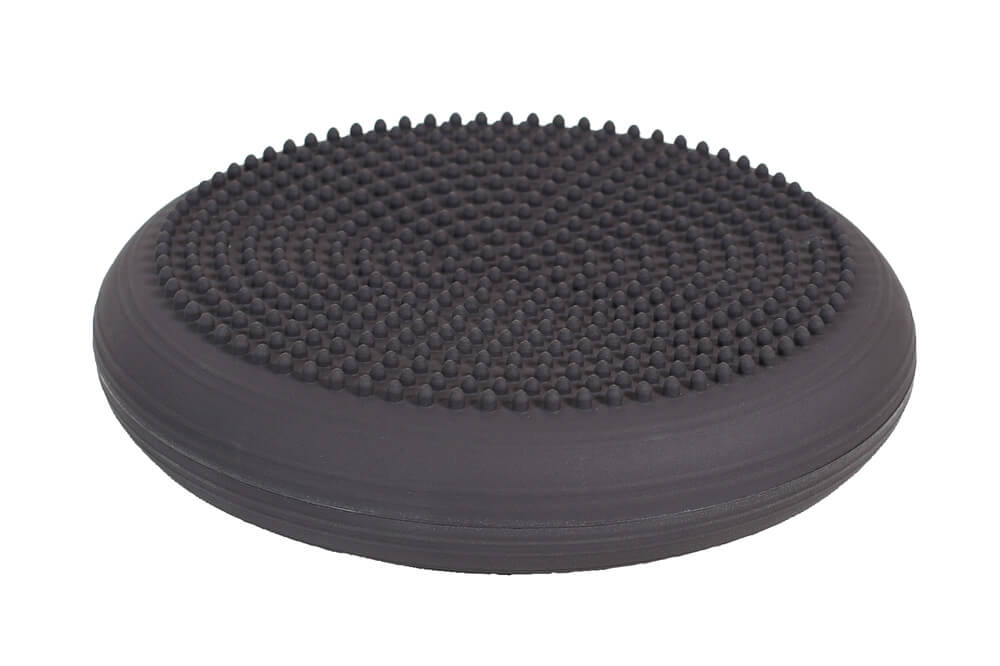
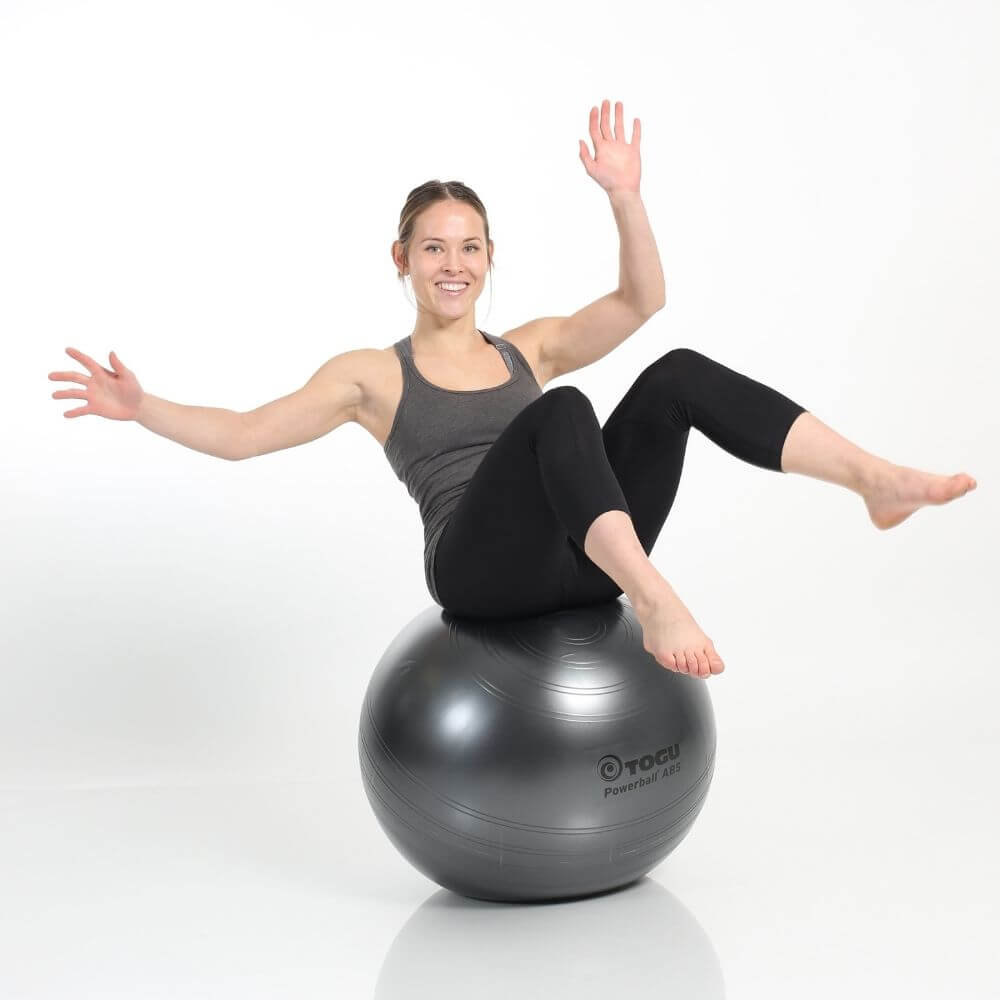
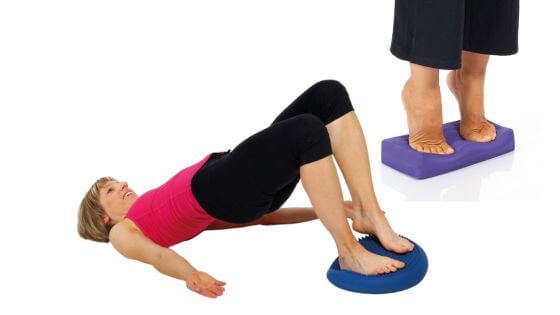
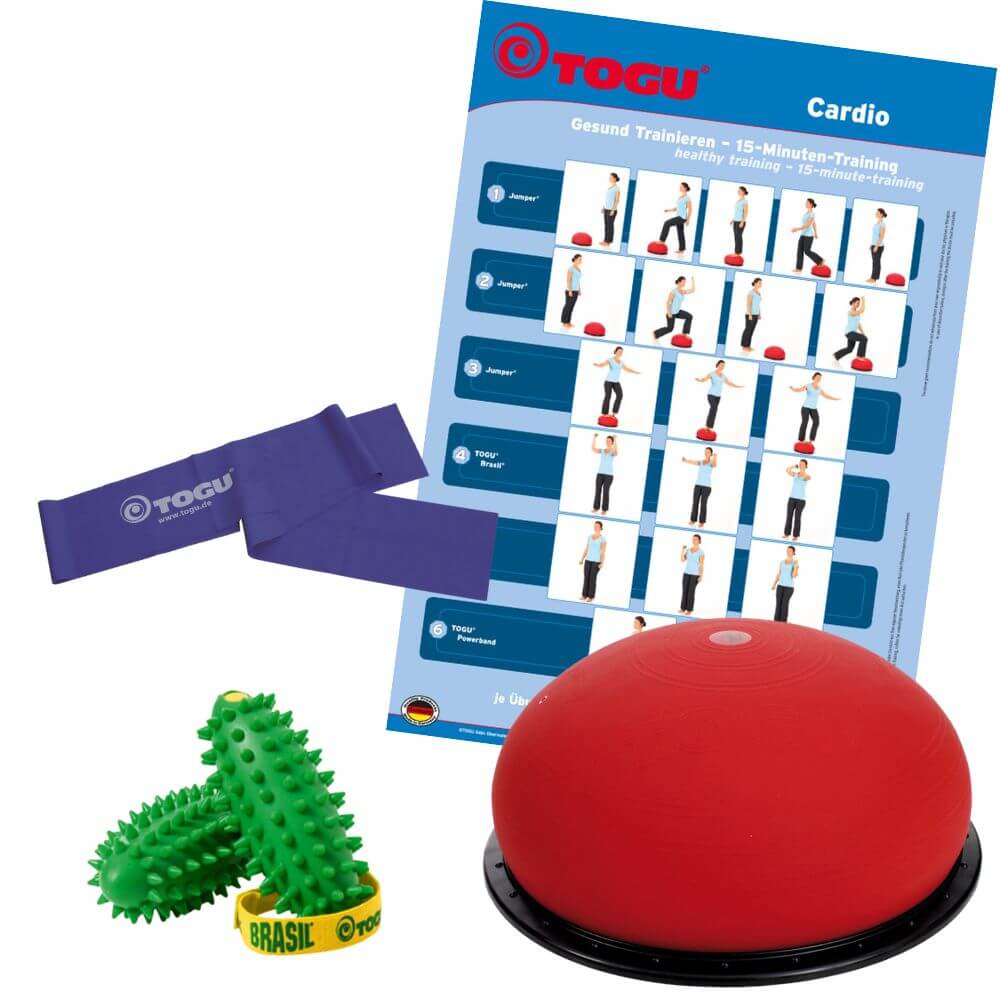
These TOGU products may interest you:

-
 Equestrian fitness is much more than just a traditional full-body workoutRider fitness is much more than a traditional full-body workout. This highly effective fitness course, specifically designed to meet the needs of riders, focuses precisely on the areas where stability, mobility and subtle aids in the saddle originate. Instead of conventional one-size-fits-all workouts, the focus is on targeted exercises for the shoulder girdle, back and deep core muscles, pelvic floor, diaphragm and respiratory muscles, as well as the stabilising muscles around the pelvis and hips.Mehr lesen
 -
 70 Years of TOGU – Seven Decades of Ball Manufacturing by Lake ChiemseeHow two brothers in Prien-Bachham by Lake Chiemsee developed the first seamless play ball in 1956 – and turned it into a family business that is now run by the third generation and inspires movement around the world.Mehr lesen
 -
 Neurofitness: Why Training Your Brain May Be One of the Smartest Investments in Healthy AgingWhen people think about fitness, they usually focus on muscles, strength, or endurance. But every movement we make starts somewhere else first: the brain.Mehr lesen
 -
 Balance Can Be Trained – And It’s More Important Than EverWhen people think of balance training, they often associate it with older adults or rehabilitation programs. In reality, balance is a fundamental component of nearly every movement we make—regardless of age.Mehr lesen
 -
 Why Muscle Strength Is a Key Biomarker for Healthy AgingFor many years, blood pressure and cholesterol levels were considered some of the most important indicators of overall health. Today, however, research is increasingly highlighting another powerful predictor of healthy aging: muscle strength.Mehr lesen
 -
 Longevity Starts with Movement – Why Strength and Balance Are Essential for Healthy AgingMore and more people want not only to live longer but also to remain healthy, active, and independent for as long as possible. This is the core idea behind longevity: it is not just about extending lifespan, but about increasing our healthspan—the years in which we maintain physical and mental well-being.Mehr lesen
 -
 A day full of activity, learning, and hands-on experienceSpecialist Workshop: Movement Competence in Canine Therapy – Holistic Concepts for Rehabilitation, Training, and Sustainable Performance on 29.04.2026Mehr lesen
 -
 TOGU Medicine Ball Classic: The Athletic Tool for athletesMore power, more control – why the TOGU Medicine Ball is a must-have in athletic training You train hard. You want results. And you know that the right tools make all the difference. The TOGU Medicine Ball Klassik is no nostalgic relic from the gym class era – it's one of the most effective pieces of equipment for explosive strength training, coordination, and functional athleticism.Mehr lesen
 -
 Unter der Lupe: TOGU® Brasil - mehr als nur ein FitnessbegleiterHeute testen wir für Euch die TOGU® Brasil. Ihr kennt diese kleinen stacheligen Kiwi-großen, mit Gewicht gefüllten Dinger vielleicht aus dem Fitness-Bereich oder aus dem Rückentraining. Aber diese kleinen Brasil lassen sich auch wunderbar in der Psychomotorik einsetzten, das möchten wir Euch heute gerne aufzeigen.Mehr lesen
 -
 TOGU: Moving Together for Health Day 2026 – Inspiration, exercise, and powerful motivation for an active lifestyleMovement connects, inspires, and creates new energy – that is exactly what the TOGU Together for Healthy Movement Day 2026 is all about on Saturday, October 17, 2026 in the Priental Hall in Aschau im Chiemgau.Mehr lesen
 -
 TOGU at therapie MÜNCHEN 2026The therapy MÜNCHEN 2026 brings together the therapy industry from Southern Germany, Austria and Switzerland on 19 and 20 June 2026 and sets important impulses for practice, training and rehabilitation.Mehr lesen
 -
 TOGU Trainings-Charts – inspiration for your workoutWho doesn’t know this? You plan to train regularly – but in everyday life, orientation is often missing. Which exercises fit which goal? How do I combine stability, strength, and mobility in a meaningful way? And how do I make sure that I use a product like the Jumper, the Aero Step, or the Redondo Ball really effectively?Mehr lesen