
- Relieve tennis elbow pain & release tension – In conversation with physiotherapist Steffi Stiefvater
- Tennis elbow – causes and symptoms:
- Therapeutic approaches for tennis elbow:
- Using the Bodybone correctly to treat tennis elbow
- Successes in the treatment of tennis elbow with the Bodybone
- Conclusion on Bodybone as a treatment method for tennis elbow
- You may be interested in this product from TOGU:
Relieve pain and tension – treat your tennis elbow
Relieve tennis elbow pain & release tension – In conversation with physiotherapist Steffi Stiefvater
Hello, I’m Steffi Stiefvater, a physiotherapist with a penchant for effective methods of treating tennis elbow. My faithful companion is the Bodybone, a versatile training aid that is not only handy, but can also be perfectly integrated into my therapy.
Tennis elbow – causes and symptoms:
Tennis elbow, also known as mouse elbow, is caused by overuse, incorrect strain or sudden rotational movements. The affected extensor muscles of the forearm cause severe pain in the outer elbow.
Here are some of the symptoms:
- Sharp pain in the forearm
- Pain when closing the fist
- Restrictions on freedom of movement
- Loss of strength in fingers and hands
In addition to the symptoms listed, tennis elbow can also lead to restrictions in everyday life, as the pain often occurs during everyday activities. Grasping objects, turning door handles or holding a pen can be painful and affect quality of life.
It is important to react to these symptoms at an early stage in order to alleviate the discomfort and initiate effective treatment. The Bodybone offers a practical option for self-treatment and can help to improve quality of life by relieving pain and maintaining mobility.
Therapeutic approaches for tennis elbow:
I use various therapeutic approaches to treat tennis elbow:
- Analyse and avoid stressful factors:
A precise analysis of the stress factors is crucial. The stress factors that favour tennis elbow can be identified through a precise analysis. These include incorrect tennis or sports techniques, excessive and one-sided strain, incorrect equipment, lack of warm-up exercises, unfavourable workplace ergonomics and poor posture in everyday life.
Adjusting these factors is crucial to prevent further strain and promote healing. Adjustments in everyday life and sport can prevent overuse.
- Tennis technique training:
Tennis elbow is often triggered by incorrect technique. Targeted technique training can reduce the strain.
- Adjustments to club weight and grip strength:
Choosing the right club is crucial. Pressure and strain can be minimised with an individual fitting.
- Improve ergonomics at the workplace:
An incorrect workstation design can aggravate tennis elbow. An ergonomic adjustment supports healing.
- Cold or heat therapy depending on how acute the symptoms are:
Cold relieves acute pain, while heat has a relaxing effect on chronic complaints.
- Stimulation current, ultrasound and shock waves:
Physiotherapeutic measures such as stimulation current, ultrasound and shock waves can promote regeneration.
- Epicondylitis brace for relief:
An epicondylitis brace supports the relief of the muscle insertion at the elbow. This is an orthopaedic device that is worn on the elbow to relieve the muscle insertion and thus reduce the pain of epicondylitis (tennis elbow).
- Careful muscle stretching:
Gentle muscle stretches can release tension and improve mobility.
- Self-treatment with the Bodybone:
The Bodybone is not only extremely effective in therapy, but also for self-treatment. That is why I am particularly happy to recommend it to my patients.
Using the Bodybone correctly to treat tennis elbow
The Bodybone offers an effective option for self-treatment of tennis elbow. Targeted applications can relieve muscle tension and reduce pain. That’s why I prefer to show my patients the following two exercises:
Large-area tennis elbow massage between forearm and wall
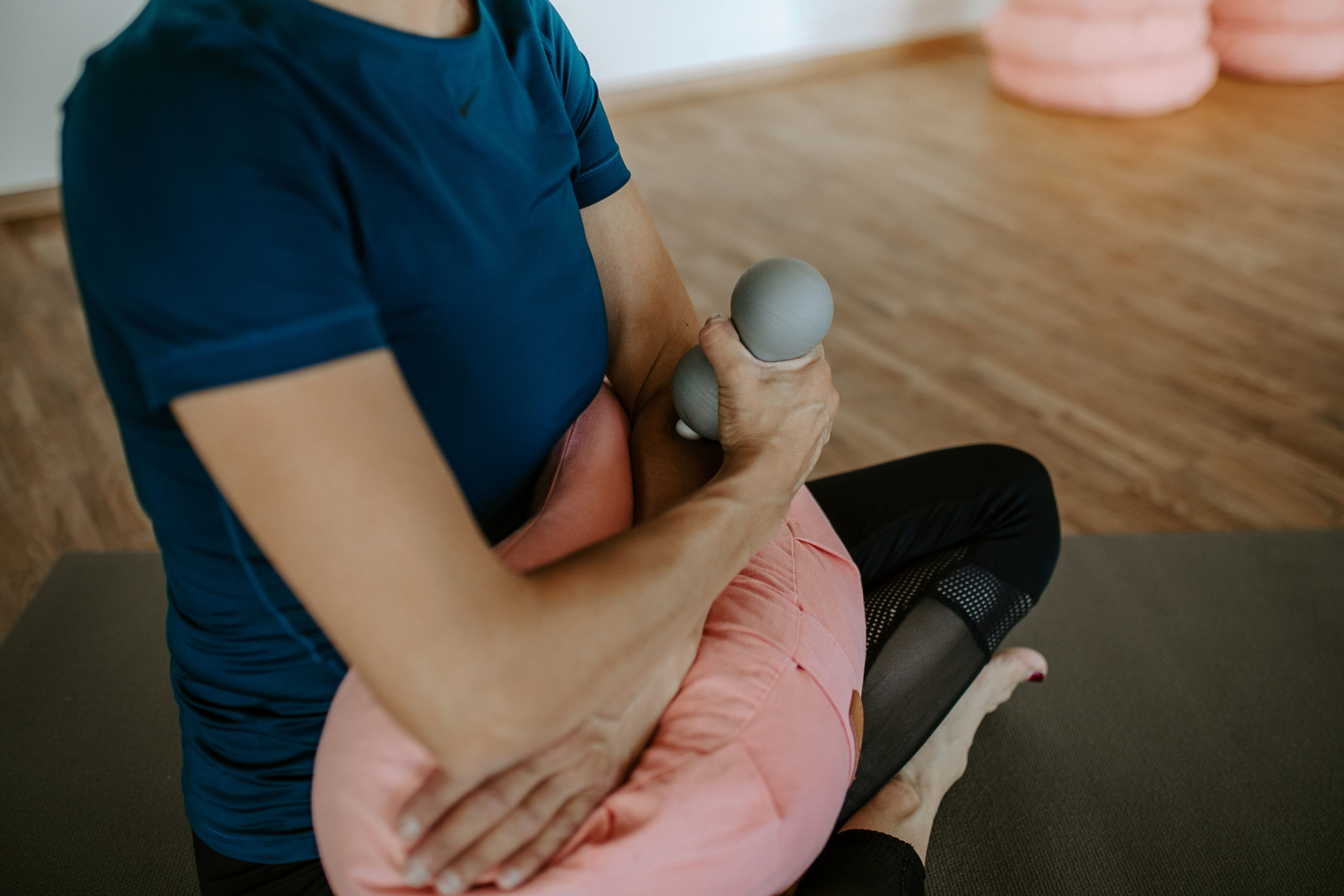
One effective method is to massage a large area on the outside of the forearm. Position the Bodybone at painful points and roll it slowly against the wall. Repeat this a maximum of 15 times. This massage loosens the muscles, improves circulation and reduces tension in the area of the tennis elbow.
Treatment of tennis elbow through trigger point massage with the attachment:
For targeted treatment of trigger points, use the special attachment on the Bodybone. Place it precisely on the painful point and apply gentle pressure for about 20 seconds. This trigger point massage can specifically release tense muscles and thus reduce pain in the area of the tennis elbow.
It is important to repeat the applications regularly in order to achieve long-term improvements. The Bodybone allows flexible adjustment of the intensity so that the treatment can be customised to the needs and comfort of the user.
The ease of use of the Bodybone makes it a practical tool for self-treatment at home. By integrating these exercises into their daily routine, sufferers can actively help to alleviate their symptoms and improve their quality of life.
Successes in the treatment of tennis elbow with the Bodybone
The use of the Bodybone has proved to be a real game changer. Regular use has relieved numerous muscle tensions, eliminated trigger points and taken the strain off the tendons. My patients report an increased effectiveness of the training and therapy. For many amateur and professional athletes alike, the Bodybone has become indispensable.
Conclusion on Bodybone as a treatment method for tennis elbow
For me, the Bodybone is not just a tool, but a reliable partner in the treatment of tennis elbow. Its versatile application options not only enable effective therapy, but also preventative measures to maintain health. Tennis elbow, once a painful obstacle, becomes a surmountable challenge with the Bodybone. Try it out for yourself and give your training a boost!
You may be interested in this product from TOGU:
Bodybone https://www.togu.de/en/shop/healthy-training/lumbar-spine/249/bodybone


-
 Gleichgewicht, Kraft und viel Austausch: 130 Teilnehmer beim TOGU TAG in AschauAschau im Chiemgau / Prien am Chiemsee, 19. Oktober 2026 – Rund 130 Teilnehmerinnen und Teilnehmer verbrachten am Samstag, 17. Oktober, einen Tag rund um Bewegung in der Priental-Halle in Aschau. Der Priener Hersteller TOGU hatte zum TOGU TAG 2026 eingeladen. Das Motto: „Gemeinsam gesund bewegen“.Mehr lesen
-
 Bewegung in der dunklen Jahreszeit: So bleibst du nach der Zeitumstellung in SchwungSeit dieser Woche gilt wieder die Winterzeit. Um 3 Uhr am Sonntag sprangen die Uhren auf 2 Uhr zurück, die Nacht hatte 25 Stunden. Ab jetzt beginnt der Feierabend in der Dämmerung, und viele spüren in den ersten Tagen, dass der Körper noch im alten Takt läuft. Eine Frage, die Physiotherapeuten aus unserem Netzwerk in diesen Wochen oft hören: Wie bleibe ich in Bewegung, wenn es um fünf schon dunkel wird? Die Antwort ist erfreulich bodenständig. Es braucht Tageslicht, ein paar feste Gewohnheiten und eine kurze Übungsfolge, die in jedes Wohnzimmer passt.Mehr lesen
-
 Bewegungsspiele für drinnen: So toben Kinder fröhlich durch den HerbstHalb fünf, draußen nieselt es, und im Wohnzimmer klettert jemand zum dritten Mal über die Sofalehne. Mit der Zeitumstellung am 25. Oktober wird es noch früher dunkel, und der Spielplatz rückt für viele Familien in die Ferne. Die Energie der Kinder bleibt. Sie braucht nur einen neuen Ort.Mehr lesen
-
 Equestrian fitness is much more than just a traditional full-body workoutRider fitness is much more than a traditional full-body workout. This highly effective fitness course, specifically designed to meet the needs of riders, focuses precisely on the areas where stability, mobility and subtle aids in the saddle originate. Instead of conventional one-size-fits-all workouts, the focus is on targeted exercises for the shoulder girdle, back and deep core muscles, pelvic floor, diaphragm and respiratory muscles, as well as the stabilising muscles around the pelvis and hips.Mehr lesen
-
 70 Years of TOGU – Seven Decades of Ball Manufacturing by Lake ChiemseeHow two brothers in Prien-Bachham by Lake Chiemsee developed the first seamless play ball in 1956 – and turned it into a family business that is now run by the third generation and inspires movement around the world.Mehr lesen
-
 Neurofitness: Why Training Your Brain May Be One of the Smartest Investments in Healthy AgingWhen people think about fitness, they usually focus on muscles, strength, or endurance. But every movement we make starts somewhere else first: the brain.Mehr lesen
-
 Balance Can Be Trained – And It’s More Important Than EverWhen people think of balance training, they often associate it with older adults or rehabilitation programs. In reality, balance is a fundamental component of nearly every movement we make—regardless of age.Mehr lesen
-
 Why Muscle Strength Is a Key Biomarker for Healthy AgingFor many years, blood pressure and cholesterol levels were considered some of the most important indicators of overall health. Today, however, research is increasingly highlighting another powerful predictor of healthy aging: muscle strength.Mehr lesen
-
 Longevity Starts with Movement – Why Strength and Balance Are Essential for Healthy AgingMore and more people want not only to live longer but also to remain healthy, active, and independent for as long as possible. This is the core idea behind longevity: it is not just about extending lifespan, but about increasing our healthspan—the years in which we maintain physical and mental well-being.Mehr lesen
-
 A day full of activity, learning, and hands-on experienceSpecialist Workshop: Movement Competence in Canine Therapy – Holistic Concepts for Rehabilitation, Training, and Sustainable Performance on 29.04.2026Mehr lesen
-
 TOGU Medicine Ball Classic: The Athletic Tool for athletesMore power, more control – why the TOGU Medicine Ball is a must-have in athletic training You train hard. You want results. And you know that the right tools make all the difference. The TOGU Medicine Ball Klassik is no nostalgic relic from the gym class era – it's one of the most effective pieces of equipment for explosive strength training, coordination, and functional athleticism.Mehr lesen
-
 Unter der Lupe: TOGU® Brasil - mehr als nur ein FitnessbegleiterHeute testen wir für Euch die TOGU® Brasil. Ihr kennt diese kleinen stacheligen Kiwi-großen, mit Gewicht gefüllten Dinger vielleicht aus dem Fitness-Bereich oder aus dem Rückentraining. Aber diese kleinen Brasil lassen sich auch wunderbar in der Psychomotorik einsetzten, das möchten wir Euch heute gerne aufzeigen.Mehr lesen